





How to Show Engaging Videos in Class in 5 Simple Ways
By Kirsten Hammond
Share This Post:
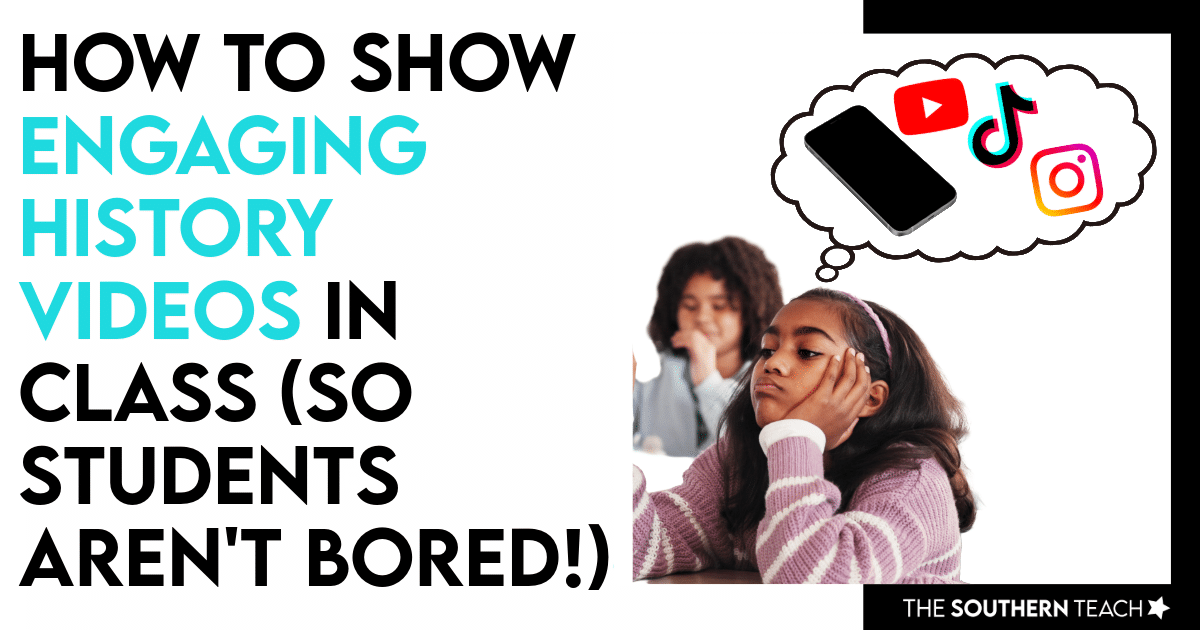
Raise your hand if you’ve ever shown a history video in class and noticed your students zoning out after 15 minutes. You’re not alone!
Today’s students are used to quick, high-energy content like TikTok or YouTube shorts. That makes it challenging for them to stay focused during longer educational films or documentaries.
The good news? With the right strategies, you can transform history films into engaging videos that spark curiosity and help students actually learn from what they’re watching.
Watch this video on Youtube!

The Challenge of Screen-Time Attention Spans
There have been a lot of studies on the link between media usIt’s tempting to think that a quiz at the end of a video will keep students on task, but (having had firsthand experience of this) that approach often backfires. Many students end up focusing only on “getting the answers” rather than paying attention to the bigger picture. Passive watching doesn’t equal active engagement, and in today’s fast-paced world, simply pressing play isn’t enough.
What students really need is structure, purpose, and interaction during the video. When you give them clear expectations and opportunities to process what they’re seeing, engaging videos become a powerful tool for learning instead of just a break in instruction.

Strategy #1: Purposeful Viewing Guides
One of the simplest ways to make engaging videos is to provide a viewing guide with focused prompts or graphic organizers. The key is not to overwhelm students with too many blanks to fill in but instead to direct their attention to the most important ideas.
Examples might include:
- Circle evidence of hardships colonists faced.
- List three causes of the Texas Revolution.
- Draw a symbol for one main idea from the clip.
By using a guide, students watch with intention instead of passively. They know what to look for, and they’re more likely to retain the information because they’ve interacted with it in writing or drawing.

Strategy #2: Pause and Discuss
Even the best video can lose students’ attention if it runs for too long without interruption. Instead of letting a 45-minute film roll, break it into shorter 10–15 minute segments. Even better, if you have a 10-15 minute video, you can break it down to what they might be used to and pause after 2-3 minutes. After each section, pause to let students process.
Discussion options include:
- Think-Pair-Share on a guiding question.
- A quick 1–2 sentence written reflection.
- Partner talk: “What stood out to you in that scene?”
These small breaks are a great reset for attention spans. They also turn a passive activity into an active one. Students have the chance to voice their thoughts, ask questions, and connect the material to what they already know.

Strategy #3: Active Note-Taking Structures
Not all students know how to take notes effectively while watching a video! Giving them a structure or framework can make all the difference and turn otherwise “meh” videos into engaging videos. Try options like:
- T-charts: “Facts I learned” vs. “Questions I still have.”
- Timelines: Add events as they appear in the video.
- Character trackers: Record what historical figures say and do.
For example, during a Civil War documentary, students could track Abraham Lincoln’s decisions on one side and Jefferson Davis’s on the other. This not only helps them organize information but also encourages them to make comparisons and notice patterns.

Strategy #4: Movement and Roles
Another way to create engaging videos is to build in movement and collaborative roles. Assign each student a role to focus on during the video, such as:
- Fact Finder – writes down new information.
- Connector – notes how the video connects to something already learned.
- Illustrator – sketches a quick picture for a key concept.
Rotate roles regularly so students experience different ways of processing content. You can also add short stretch breaks, partner discussions, or even a quick stand-up/sit-down activity to keep the energy level high. Yes – videos CAN be fun!

Strategy #5: Post-Video Activities Beyond Quizzes
Finally, don’t end video lessons with the same old multiple-choice quiz. Instead, try activities that require students to process and personalize what they’ve learned. Some options include:
- One-sentence summary: “In one sentence, explain what this video was mainly about.”
- Top 3 takeaways: Students share the three most important things they learned.
- Creative responses: Have students write a social media caption, create a comic strip, or even craft a debate question based on the video.
These kinds of activities move students beyond recall and into higher-order thinking. They’re actively using the information rather than passively repeating it.
Engaging Videos Students Love
Videos don’t have to be passive time-fillers. With the right strategies, you can turn them into engaging videos that students actually enjoy. By adding purposeful viewing guides, pausing for discussion, providing structured note-taking, incorporating movement and roles, and swapping quizzes for creative responses, you’ll transform video lessons into interactive learning experiences.
The result? Students will stay focused, retain more information, and even look forward to history movie or video day. Instead of zoning out, they’ll see videos as new opportunities to connect, reflect, and engage.
kirsten hammond
Kirsten is a former 3rd and 5th grade teacher who loves helping upper elementary teachers by creating resources and sharing ideas that are engaging, research-based, and TEKS-aligned. She is a work-from-home mama of 3 rambunctious little ones and loves running, true crime, and lots of coffee.